It was a rainy Friday evening in Chattogram. The air was heavy and warm. I had invited four friends over for dinner. I wanted to impress them. I planned to make a perfect roast chicken.
I spent all afternoon prepping the bird. I rubbed it with salt and spices. I put it in the hot oven. The house smelled amazing. I felt like a real chef. The timer went off after an hour.
I pulled the pan out carefully. The skin looked golden brown and crisp. I set it on the table with pride. Everyone was hungry. Then, I cut into the thickest part of the thigh.
The juices were not clear at all. The meat was totally pink. It was raw inside. My heart sank to the floor. I was so embarrassed. We could not eat it yet.
I had to throw it back in the oven. We ended up eating cold side dishes while waiting. It ruined the whole mood. That night changed how I cook forever.
I learned a hard lesson that night. You can never trust the color of meat. You can never trust a clock. You need real numbers. I started my search for the best digital meat thermometer.
Why Guessing Meat Temp is a Bad Idea
I used to think poking meat was bad. I thought it let all the juices out. That is just an old myth. Poking a tiny hole does no harm. But eating raw chicken does.
Food safety is a very big deal. Bacteria grow fast when the meat is warm. You have to reach a safe heat to kill them. For chicken, that number is quite high.
For beef steaks, the number is lower. Some people like a red center. I like mine pink in the middle. But you cannot guess by looking. Every oven is different.
A thick steak takes longer than a thin one. A cold steak takes longer than a room-temperature one. Many things change the cooking time. The only truth is the heat inside.
Features I Needed in the Best Digital Meat Thermometer
I spent days reading reviews online. It was very confusing. There is a lot of junk out there. People write glowing reviews for bad products. I bought a few to see for myself.
I quickly learned what matters most to me. I looked for three main things. I wanted speed, accuracy, and ease of use. If a tool is slow, you burn your hand.
| Feature Needed | Why It Matters To Me | Real Life Use Case |
| Fast Reading Speed | Keeps my hands away from fire | Grilling burgers outside |
| Long Metal Probe | Reaches the center of thick cuts | Roasting a whole turkey |
| Bright Backlight | Helps me see in the dark | Cooking outside at night |
| Easy Battery Swap | Keeps the tool working for years | Replacing dead cells fast |
Speed is the most vital part of a good probe. I was once grilling burgers on a Sunday. The coals were very hot. My face felt like it was melting.
I used a cheap tool from a local shop. I stuck it in a patty. The numbers slowly ticked up. It took fifteen seconds to finish. My hand was burning the whole time.
A fast tool takes only two seconds. It gets in and gets out fast. That speed saves your skin. It also stops heat from leaving the oven. Fast readings keep things hot.
The length of the metal stick is also key. We call this part the probe. A short probe is useless for big meals. Imagine cooking a large pork shoulder.
You need to know the heat in the center. If the probe is short, it only reads the edge. The edge is always hotter. It will tell you the meat is done too soon.
Testing Different Types of Probes
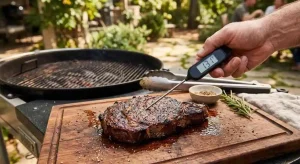
There are three main types of tools. I tried them all in my own kitchen. Some were great for me. Some were a waste of money. I want to share my honest thoughts.
| Type of Tool | Best Feature | Biggest Flaw |
| Instant Read Pen | Very fast and easy | You must stay near the heat |
| Wire Leave-In | Great for slow roasts | The wires break easily |
| Wireless App Probe | Let’s watch TV | Apps can lose the signal |
My Experience with Instant Read Pens
This is my favorite style for daily use. It looks like a thick pen with a needle. You keep it in your pocket. When you want to check, you poke it.
You get a number in two seconds. Then you pull it out. It is very simple to use. I use this type for steaks and fish. It is very fast and light.
But it has one downside. You cannot leave it inside the hot oven. It will melt into a mess. I left a cheap plastic one too close to a pan once.
The casing warped and turned black. The screen went blank. I had to throw it away. Always pull an instant-read tool out of the heat.
Trying the Leave-In Wire Probes
Next, I tried a wire probe style. This has a metal stick on a long cable. The cable plugs into a box with a screen. You stick the probe in raw meat.
You put the meat in the oven. You close the door on the wire. The box sits on the counter. This is great for long, slow cooks. I used it for a beef roast.
I did not have to open the oven door. I could just watch the numbers go up. It was very relaxing. Once, the alarm went off so loud it scared my cat.
But these have flaws too. The wires are weak. If you pinch the wire in the door, it breaks. If you get water in the joint, it also breaks.
Using Fancy Wireless App Tools
I also tried the newest tech. These are thick metal spikes with no wires. They connect to your phone using Bluetooth. You can sit on the couch and watch.
At first, it was very cool. My phone showed a graph of the heat. But then I walked to my bedroom. My phone buzzed because it lost the signal.
The thick metal smoker blocked the wave. I had to stay close to the patio. It was annoying to stay put. The app was also a bit hard to set up.
These tools cost a lot of money. They are neat but not perfect yet. Sometimes, simple is better for a home cook. I prefer my fast pen.
How to Get the Best Results Every Time
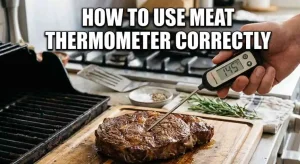
Having a good tool is only half the battle. You also have to use it correctly. I made lots of mistakes at first. I poked right into a bone once.
Bones heat up faster than meat. The tool said my steak was done. But the meat near the bone was raw. Always push the tip into the thickest part.
Stay away from bones and big fat chunks. Fat also gives false readings. You want to measure the pure muscle. I always check two different spots to be safe.
You also need to keep your tools clean. Raw meat has nasty germs on it. After you poke raw chicken, the tip is dirty. Do not poke it again later.
I keep a wet, soapy cloth near the stove. I wipe the metal tip after every use. I never soak the whole tool in water. Even waterproof tools can leak.
Testing the Tool with Ice Water
How do you know if your tool is right? I learned a neat trick from a chef. It is called the ice water test. I do this once a month now.
I fill a glass with crushed ice. Then I add cold water to fill it. I stir it for a minute. The water becomes cold. It hits an exact heat.
I put the metal tip into the icy water. I make sure it does not touch the glass. The screen should read exactly freezing. This gives me deep trust.
If the tool is wrong, I can fix it. Good tools have a button for this. Cheap tools do not. If a cheap tool is wrong, buy a new one.
Final Thoughts on Cooking with Confidence
Cooking used to give me a lot of stress. I hated that feeling of doubt. I hated cutting into a nice roast and hoping for the best.
That rainy night in Chattogram taught me a lot. Now, I never guess anymore. I use data. A good tool takes away the fear of raw meat.
It lets you relax and enjoy the night. You can chat with your friends. You know exactly when dinner is ready. It makes you a better cook.
Finding the best digital meat thermometer changed my life. It is the most vital tool I own. It is worth every penny. Happy cooking to you all.
Frequently Asked Questions
How do I know if I have the best digital meat thermometer?
The best tool gives a reading in under three seconds. It must be accurate within one degree. Look for a long probe to keep your hands safe from the high heat of the grill.
Can I leave my digital probe inside a hot oven?
Only leave it in if it has a metal wire made for high heat. Standard plastic pens will melt fast in a hot stove. Always check the manual to see if your tool is oven-safe.
Why does my meat thermometer show the wrong temperature?
The probe might be touching a bone or a large pocket of fat. These areas heat up faster than the lean muscle. Move the tip to the thickest part for a true and safe reading.
How do I test my tool for accuracy at home?
Place the probe in a glass full of crushed ice and cold water. It should read exactly freezing after a minute. If it is off, use the reset button to fix the data.
What is the best way to clean a digital meat thermometer?
Wipe the metal tip with a soapy cloth after every single use. Never soak the whole tool in a deep sink of water. This keeps the sensors dry and prevents rust over time.